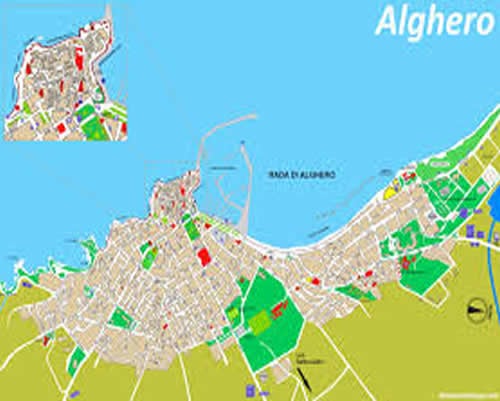
Complete Guide to Alghero’s Neighborhoods
Alghero works like a small layered urban system: the historic center inside the walls, the seafront along the bastions and port, the beach belt of Lido San Giovanni and Maria Pia, plus expansion districts to the north and southeast. The choice of where to sleep changes your walking pace, the time you spend in the car, the way light cuts across the alleys, and how you read the city.
This guide reads Alghero as a network of routes, slopes, stone, light, and access rules, without promoting specific places or B&Bs. It starts with the most useful neighborhoods for people looking for a B&B, then moves on to the technical logic of movement, parking, and seasonal crowding.
1. Where to stay in Alghero’s historic center?
The historic center, within the Aragonese walls, is the densest core and is meant for walking. It helps to distinguish between the central area (around Piazza Civica, Via Roma, San Michele, San Francesco) and the edges of the walls (sea side and land side, toward Porta Terra, Bastioni Marco Polo, and Torre di Sulis).
Those staying in the historic center reduce travel to squares, bastions, the port, and daytime dining stops to just a few steps, but they need to accept some conditions:
- wind is funneled through the alleys, intensifying gusts in narrow streets and along the bastions;
- stone retains humidity and heat, making some stretches cooler in summer but colder at night in spring and autumn;
- crowds alter walking speed, especially between Via Roma, Piazza Civica, and the streets leading toward the port.
In the more residential inner districts, a few minutes on foot from the bastions, the city feels calmer but the layout becomes a little less readable. Here, the secondary passages between the Cathedral, Via Carlo Alberto, Via XX Settembre, and the streets behind San Michele are more discreet, but less signposted.
1.1. B&Bs and discreet public viewpoints
In the historic center, many B&Bs occupy renovated Catalan palazzi, with small forecourts, internal courtyards, and compact staircases. Choosing a B&B in these areas requires paying attention to:
- the actual distance to a pedestrian exit through the walls, not an optimized map route;
- the presence of squares and micro squares where crowds split up (small squares between the bastions and Via Carlo Alberto, corners of Via Minerva, passages toward the Porta Terra and Sulis towers).
The most discreet public viewpoints are not on the main streets, but on side streets that line up with the larger roads (Via Sassari, Via Simon, Via XX Settembre) and then descend toward the quays or the land side. These are quieter areas where the city feels like a second reading, but they require a bit more orientation skill.
For people who like this deeper reading, the city’s technical walking network is made of small open pockets, doorways opening into entrance halls, shared courtyard entries, and service routes designed for residents’ daily movement, not just for visitors.
2. Historic center vs Lido San Giovanni: how do you choose?
Choosing between the historic center and Lido San Giovanni means choosing between density and distance, stone and sand, alleys and seafront promenade.
2.1. Historic center: strengths and limits
The historic center offers:
- direct walking access to the walls, Torre di Sulis, Bastioni Marco Polo, the port, and churches;
- the option to pause in continuous shade along the streets, moving from arcade to courtyard without leaving the urban circuit;
- the highest concentration of small B&Bs, often in converted townhouses.
The main limits are:
- the ZTL and difficult car access, with the need to unload luggage quickly and park outside the center;
- the slope between inner streets and exit streets, which can be tiring if you are carrying luggage or traveling with children;
- high season crowds, which reduce the sense of space in some main streets.
2.2. Lido San Giovanni: sea, but less center
Lido San Giovanni is the urban beach district, between the city beach, Viale I Maggio, and the La Pietraia area. Here the city stretches along the sea, stone gives way to pines and sand, and the walking pace changes: your stride lengthens, the perspective opens toward the sea, but the distance from the historic center increases.
Those staying in Lido San Giovanni:
- have the beach just a few steps away, but the historic center is about a 10 to 15 minute walk or 3 to 5 minutes by car;
- find more properties designed around the beach, often hotels and small residences, with dedicated parking;
- can reduce car time only if they choose a property well connected to a pedestrian route toward the center, avoiding the busiest streets.
Everyday use patterns in Lido San Giovanni can be read in the bars, beach umbrella rental points, and beach access streets, where crowds change walking speed during the busiest hours.
3. How much it costs to stay in summer and when to go
Accommodation prices in Alghero, especially in the historic center and Lido San Giovanni, vary noticeably between high, shoulder, and low season. For mid range B&Bs, in summer (June to September) indicative prices can start around €80 to €120 per night for two people, with higher peaks in July and August depending on location, view, and services.
These figures are indicative because prices change based on last minute offers, length of stay, and property type. In spring (May) and autumn (September to October), prices go down and the city feels more fluid, with shorter queues along Via Roma and on the bastions.
3.1. When to go: urban rhythm and crowding
The best season to read the city in a technical and relaxed way is late spring and late autumn, when:
- the light is softer, the shadows are longer, and secondary passages are easier to read;
- crowds affect walking speed less, making it easier to observe traces of daily use, courtyards, and second reading squares;
- the stone of the walls and alleys does not burn in direct sunlight, making visits more comfortable during central hours.
In summer, stone retains heat, wind can feel sharper along airflow corridors, and crowds tend to concentrate on the main routes (Via Roma, Via Carlo Alberto, Via Minerva, the bastions).
4. Where to park in central Alghero and driving difficulties
The historic center is enclosed by a ZTL whose perimeter includes the bastions, the port, and Via Catalogna. Car access is allowed only during loading and unloading time windows, with limited dwell time, while parking is generally prohibited. This system reduces traffic but increases logistical complexity for those arriving by car.
The most commonly used parking areas for people staying within a few minutes’ walk of the historic center are:
- Piazzale della Pace, facing the port, with higher rates in summer and often free parking in winter depending on on site signage (to be verified);
- parking along Via XX Settembre and side streets, including some paid public car parks, useful as a base for reaching the center or the streets by the walls.
Actual driving difficulty in the historic center depends on:
- the slope between streets, which can be tiring uphill;
- polished stone, which can be slippery in humid conditions, especially in narrower streets;
- crowds, which affect walking speed and the perception of space, especially on Via Roma and in the central streets.
5. Best neighborhoods to stay in Alghero
The choice of neighborhood reflects the kind of urban walk you prefer: stone alleys, seafront edges, or transition districts toward greenery and the beach.
5.1. Historic center and the edges of the walls
The historic center, with its secondary passages, offers an intense experience, but it requires you to read the stone, the slope, and the crowd. Torre di Sulis, the bastions, the Piazza Sulis area, Via XX Settembre, and the side streets near San Michele offer discreet views where the city feels calmer while remaining close to the busiest spots.
For those who prefer a more legible route, the Piazza Civica, Via Roma, and Via Carlo Alberto area is more linear, with fewer open pockets but wider streets, where crowds flow more regularly.
5.2. Lido San Giovanni and transition areas
Lido San Giovanni, with its city beach, Viale I Maggio, and the La Pietraia area, is a transition district between sea and center, useful for those who want to keep the beach just a few steps away but still enjoy walking toward the historic center. Stone gives way to sand and pines, the walking pace lengthens, and crowds gather along the beach and rental points, with the option of walking toward the port and the bastions as well.
Transition areas toward the north and southeast (Pivarada, Maria Pia, the San Giuliano and Carmine districts) offer more space and greenery, but increase the distance from the historic center, requiring a car or city bus for a more intensive visit.
FAQ: where to stay, historic center, Lido, parking, walking
1. Where should I stay in Alghero’s historic center?
The historic center is ideal for those who want to walk between the walls, the port, and inner districts, but it comes with ZTL restrictions and difficult car access. The Piazza Civica, Via Roma, and Via Carlo Alberto area is more linear, while the streets behind San Michele, Via XX Settembre, and the San Francesco streets offer more discreet, less legible views.
2. Is the historic center better or Lido San Giovanni?
The historic center offers proximity to the walls, the port, and B&Bs, but with more stone, more crowds, and less space. Lido San Giovanni offers sea and seafront promenade, with a 10 to 15 minute walk to the historic center, ideal for those who want to alternate beach and city.
3. How much does it cost to stay in Alghero in summer?
For mid range B&Bs, summer prices (June to September) generally range from €80 to €120 per night for two people, with higher peaks in July and August depending on location, view, and services.
4. When should I go to Alghero?
Spring (May) and autumn (September to October) are the best seasons to read the city calmly, with softer light, fewer crowds, and fewer heat related issues.
5. Where can I park in central Alghero?
The most commonly used parking areas are Piazzale della Pace, facing the port, and Via XX Settembre, with higher summer rates and often free parking in winter depending on signage. The ZTL makes parking in the center difficult, with access allowed only during loading and unloading windows.
6. Is it difficult to drive in the historic center?
Slopes, polished stone, and crowds make driving more complex, especially on Via Roma and in the central streets. The city is designed for walking, with a ZTL and outside parking, and crowds change walking speed in the main streets.


Practical note: always check ZTL signage and parking rates on site, especially in high season, because schedules and regulations may change.