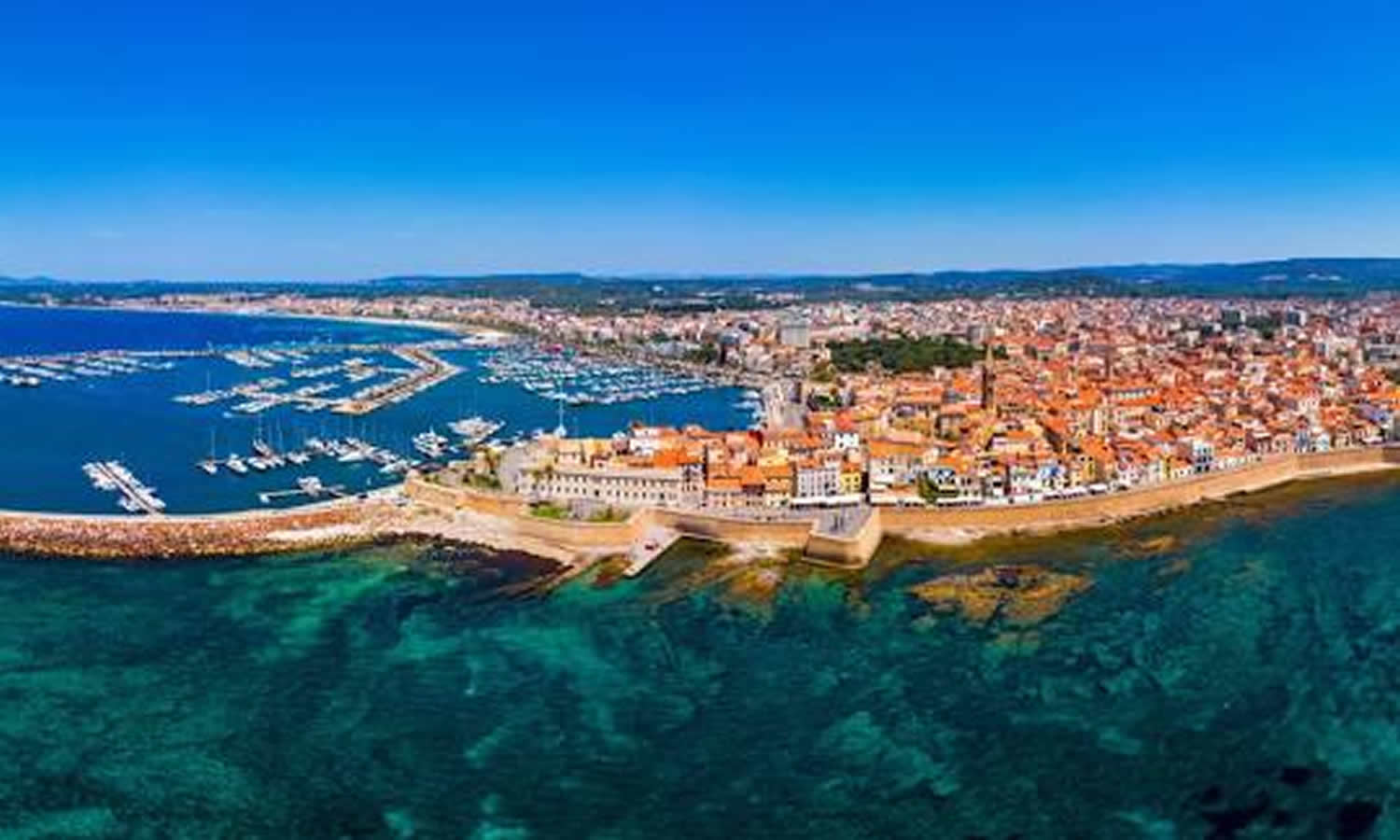
The best things to see in Alghero revolve around three key elements: the Catalan historic center, the sea of the Porto Conte Park, and the Nuragic and prehistoric archaeological sites in the surrounding area. Alghero is famous for its beaches, its sea caves like Neptune's Cave, and its Spanish bastions which become the perfect scenic promenade at sunset.
Alghero: The Catalan Gem of Sardinia
The fortified city of Alghero, located on the west coast of Sardinia, offers a relaxed and welcoming atmosphere, in contrast to the exclusive Costa Smeralda located on the opposite side of the island. With its Catalan historical roots, Alghero is often perceived as a Catalan town rather than an Italian one.
The majestic waterfront walls and defensive towers surrounding the old town were erected by the Catalans in the 16th century, and many residents still speak Algherese Catalan, a dialect from that era. This blend of cultures is a unique aspect of Alghero that distinguishes it from the rest of Sardinia.
Alghero's history dates back to prehistoric times, witnessed by the imposing stones of the Nuraghe Palmavera, located just outside the city. Another important archaeological site is Anghelu Ruju, near Alghero-Fertilia Airport, offering a fascinating glimpse into ancient Nuragic civilizations.
South of the airport lies the splendid Maria Pia beach, characterized by fine white sand extending to the Port of Alghero. This area is lined with hotels, bars, and seaside restaurants known for their seafood dishes, including the renowned Alghero lobster. Boat trips from the port take visitors to the spectacular Neptune's Cave, one of the region's main natural attractions. Nearby is Nereo's Cave, presumably the largest underwater cave in the Mediterranean, attracting divers from all over the world.
Alghero's historic center, with its pedestrian streets, is an enchanting maze of shops and outdoor cafes. Historical monuments not to be missed include the 16th-century Palazzo d'Albis and the Cathedral of Santa Maria, which features a variety of architectural styles reflecting the city's rich cultural history.
The best things to see in Alghero revolve around three key elements: the Catalan historic center, the sea of the Porto Conte Park, and the Nuragic and prehistoric archaeological sites in the surrounding area. Alghero is famous for its beaches, sea caves like Neptune's Cave, and Spanish bastions that become the perfect scenic promenade at sunset.
Why visit Alghero today?
Alghero in 2025 is one of the liveliest destinations in northern Sardinia, with direct flights, a long season, and a rare mix of sea, history, and nightlife. The city is often called the "Little Barcelona of Sardinia" due to the Catalan heritage visible in the language, architecture, and place names.
A welcoming B&B offers authentic local experiences, especially in the historic center or near the bastions, where it is easy to get around on foot. Those who love slow travel find Alghero an ideal base for exploring the entire Coral Riviera over several days.
Alghero is truly a gem of Sardinia, with its combination of natural beauty, historical heritage, and a vibrant Catalan culture that continues to live in the hearts and traditions of its inhabitants.
“Alghero boasts culture, beaches, and magnificent surroundings: it is an outpost of tourism in Sardinia,” writes Dove Viaggi.
Travel writer Elena Errante recommends “between 5 and 7 days to visit Alghero and its surroundings” if you want to alternate between the sea, nature, and villages.
Historic Center and Bastions
Alghero's historic center is a walled city on the sea, with Spanish defensive towers, cobblestone pavements, and narrow alleys leading to small squares and Gothic churches. Walking here at sunset means combining history, sea views, and seafood restaurants overlooking the bastions.
What to see on foot in the historic center:
Torre di Porta Terra: the ancient entrance to the city, now a panoramic point and exhibition space.
Spanish towers and bastions: Torre di Sulis, Torre di San Giacomo, Torre San Giovanni, Torre della Maddalena.
Marco Polo and Cristoforo Colombo Bastions: perfect for watching the sun go down over the Capo Caccia promontory.
Alghero is famous for its Catalan historic center, where Algherese—a variant of Catalan—is still spoken today. The Spanish bastions recount the city's Aragonese past and are one of the most photographed places on the northwest coast.
Churches and Museums in the Ancient Heart
Inside the walls, you will find some short but dense cultural stops, suitable even for those traveling with limited time. Many can be visited in less than an hour and can be included in a walking tour.
Places not to skip:
Cathedral of Santa Maria: mixes Catalan Gothic and Baroque styles, with a bell tower dominating the city skyline.
Church of San Francesco: one of the most important examples of Catalan Gothic architecture in Sardinia.
Coral Museum: housed in Villa Costantino, it tells the history, fishing, and processing of corallium rubrum, the symbol of Alghero.
The Coral Museum shows how coral fishing has marked the economic and cultural identity of the city. A one-day itinerary in the historic center combines towers, churches, and museums with a break in the cafes of Piazza Civica or along the bastions.
Sea, Beaches, and Porto Conte Park
The coast of Alghero alternates between urban sandy beaches and wilder coves within the protected area of Porto Conte. From May to October, the sea is the main attraction, with clear water and seabeds suitable for snorkeling.
Main beaches near the city:
Lido di San Giovanni: a long city beach, convenient for children and those who don't want to use a car.
Maria Pia: white sand, dunes, and pine forest, ideal for those seeking a more natural environment.
Le Bombarde: one of the most famous beaches of the Coral Riviera, transparent sea, and complete tourist services.
Lazzaretto: a small sandy bay with rocks, frequented for the beauty of the water and its proximity to Le Bombarde.
The Porto Conte Regional Natural Park includes bays, cliffs, and trails with sea views. The Bay of Porto Conte is a large sheltered gulf, ideal for kayaking, boating, and swimming in calmer seas.
Capo Caccia and Neptune's Cave
The promontory of Capo Caccia is the symbol of the Alghero coast and one of the most scenic viewpoints in Sardinia. Its sheer cliffs dropping into the sea at sunset can also be seen from the bastions of the historic center.
Key points to know:
Capo Caccia: limestone promontory with lighthouses, viewpoints, and trails above the cliffs.
Neptune's Cave (Grotta di Nettuno): a sea cave with stalactites and stalagmites, reachable by boat or by descending the Escala del Cabirol, a long panoramic staircase carved into the rock.
Punta Giglio: trekking area with views of the entire gulf and military remains repurposed as a cultural path.
Capo Caccia is a central destination for boat excursions from Alghero, often combined with a visit to Neptune's Cave. Trekking lovers choose Punta Giglio and the trails of Porto Conte Park to combine nature, history, and coastal landscapes.
Alghero and Surroundings: Nature and Archaeology
Around the city, you will find Nuragic sites, necropolises, and coastal lakes that complete the experience beyond the sea. Guests can book a guided excursion through the site and visit multiple stops in half a day without having to move independently.
Main archaeological sites:
Nuraghe Palmavera: a well-preserved Nuragic complex a few km from the city, evidence of the Nuragic civilization in northwest Sardinia.
Anghelu Ruju Necropolis: one of the most important prehistoric funerary complexes on the island, with "domus de janas" (fairy houses) carved into the rock.
Sant’Imbenia: Roman ruins and remains of an ancient settlement overlooking the gulf.
A little further away, Lake Baratz is the only natural lake in Sardinia, surrounded by dunes and Mediterranean scrub. This area is suitable for those seeking quiet walks, birdwatching, and landscape photography.
Local Experiences and Cuisine
The city offers a cuisine that combines Sardinian tradition and Catalan influences, with a strong presence of fish and seafood. In the historic center, you can find taverns and restaurants serving dishes such as Catalan lobster, seafood fregula, and almond-based sweets.
Those who choose a B&B stay in the center can experience evenings among alleys, venues with live music, and artisanal ice cream shops open late. Local markets and small coral workshops offer typical products and crafts linked to the maritime tradition.
How many days are needed in Alghero
To see the main attractions of Alghero, you need at least two or three days, alternating between the historic center, Capo Caccia, and one or two beaches. A 3-day itinerary covers churches, towers, bastions, and a trip to Neptune's Cave well.
Those who also want to explore Porto Conte, the Nuragic sites, and various beaches should plan between 5 and 7 days in the area. This way, you can also fit in some guided excursions and slower days between the sea and inland villages.
Alghero is a strategic base for moving around northwest Sardinia, towards Stintino, Bosa, or the Sassari area, with car or bus trips of one or two hours. Those who don't use a car can still see a lot thanks to organized excursions, local buses, and bike or scooter rentals.
FAQ about Alghero (2025)
How many days are needed to visit Alghero and its surroundings?
For a first visit, 2–3 days are enough, but for a complete trip involving sea, nature, and archaeology, 5–7 days are recommended.
What to see in Alghero in one day on foot?
In one day, you can visit the historic center, the Torre di Porta Terra, the Cathedral of Santa Maria, the Church of San Francesco, and take a walk on the bastions at sunset.
What is the best time to go to Alghero?
From late May to early October, the sea is the main attraction, while spring and autumn are ideal for trekking, archaeological visits, and fewer crowds.
Is it possible to visit Neptune's Cave without a boat?
Yes, Neptune's Cave can also be reached on foot by descending the Escala del Cabirol from Capo Caccia, but access depends on sea conditions and path safety.
Is Alghero suitable for travelers without a car?
Yes, many attractions are reachable on foot or by local buses; several excursions to Capo Caccia, Porto Conte, and Nuragic sites depart directly from the city.
Where to stay to visit Alghero?
Those who want to experience the city on foot choose the historic center or Lido di San Giovanni, while those looking for more nature may prefer the Maria Pia or Porto Conte area.
Safe travels and have a great holiday!