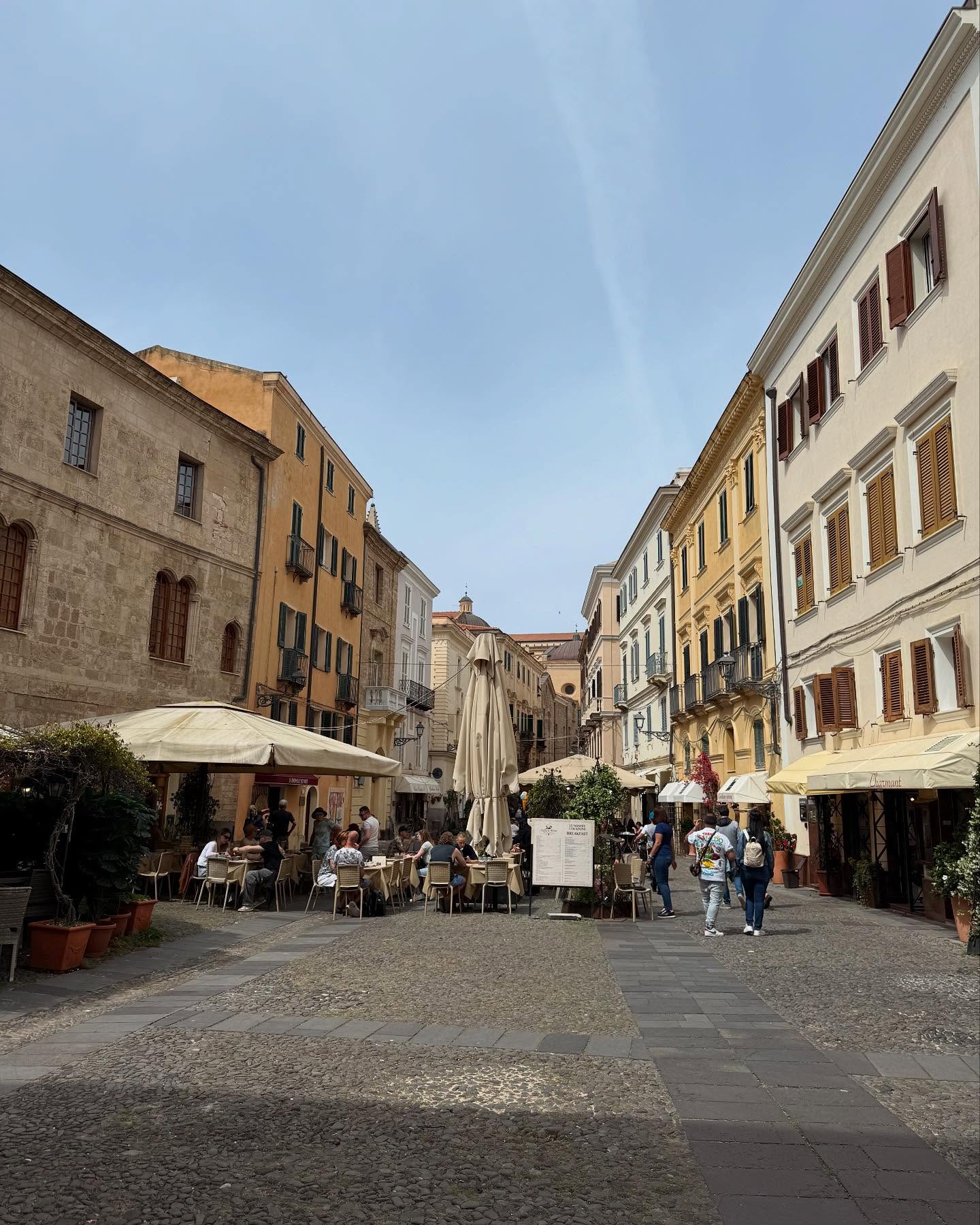
Alghero historic center: microclimate and alleyways for choosing a B&B
How to choose where to stay in Alghero by reading the historic center as a technical system: alleyways, humidity, wind, slopes, and discreet viewpoints. Practical advice for B&Bs inside the walled town and in the immediate surroundings.
B&B in Alghero: reading the city as a technical system
Choosing a B&B in Alghero is not just about a sea view or how close you are to the beach. The historic center is a compact urban system with walls, bastions, stone alleyways, and squares that act as filters for wind, light, crowds, and humidity. Areas change depending on how you walk, how well you handle stairs and smooth stone, and whether you care more about waking up to sunlight or evening noise.
The walled center remains pedestrian from spring to autumn, with traffic restrictions and ZTL rules pushing cars around the perimeter. In summer, many sections near the wall promenade and Piazza Civica become effectively pedestrian only, with hours that change depending on the season and local events. If your B&B is not already inside the pedestrian perimeter, you need to factor in luggage handling and walking transfers, cobblestones included.
Where to stay: areas and microclimate in the historic center
Inner alleyways, walls, and car access
Inside the walled center, the network of narrow lanes creates air corridors where tramontana and mistral winds can become intense, especially near the northern walls and the exits toward the port. Homes facing inward, toward courtyards and arches, tend to get less wind but retain more residual humidity, especially at lower levels.
The more central zones, near Piazza Civica and the churches, offer direct pedestrian access to the main streets, with more sheltered wind conditions and less nighttime engine noise than wall facing streets. If the B&B is a short distance away, you can often leave the car on a connecting street now subject to alternating one way and partial pedestrian restrictions, with passage allowed only at set times.
Wall front, bastions, and lookouts
Properties facing the walls, around the bastions of San Giovanni or San Francesco, offer panoramic views and direct access to the rampart walk, but with greater exposure to wind and possible evening crowd noise. Here the exterior stone of the façades tends to store heat and release it late, but ventilation is stronger, especially in summer.
If the B&B is near a bastion, the route to reach it is often short, even if pedestrianization sometimes forces slightly more winding approaches because cars are diverted along parallel streets. In some stretches, during summer, the road linking the port to the square is partially closed to traffic, turning a main axis into a pedestrian corridor.
Secondary passages: how to read alleyways, arches, and courtyards
Hard to read lanes and traces of daily life
In Alghero’s historic center, many alleyways are not immediately “readable” if you do not know the area: they are not guidebook landmarks, but urban structures that work as corridors of shade and airflow. Some lead to internal courtyards where cisterns and wash basins were traditionally placed, where the stone stays more humid and often shows traces of recent maintenance: weeds removed, plaster patched, runoff marks along low walls.
These secondary routes, often not shown on tourist maps, let you avoid the busiest stretches without leaving the center. In some spots the paving is uneven, with stones polished by foot traffic and years of cleaning, and they can become slippery when damp. In summer, foot traffic increases but walking speed drops because the crowd reduces the free space.
Courtyards, arches, and wall projections
Inner courtyards, often linked by arches and narrow passages, act as pockets of shade. Here the perceived temperature is lower, but the air may be stiller and more humid, especially in the morning. In some places you can see signs of everyday life: laundry drying on balconies, furniture brought outside for cleaning, labels from small shops still operating.
Some projections and ledges along walls, where public access is allowed, let you step out of the flow of the main streets and view the city from a higher level without becoming a crowded lookout point. In these areas the wind can funnel through, while sunlight reaches the space only at certain hours, creating sharp low angle light contrasts.
Discreet viewpoints and public access points
Bastions with permitted access
Alghero’s bastions, accessible via public stairways, offer wide views over the port and the sea, but only where access is expressly allowed. In some years, checks and regulations on elevated points have become stricter, especially in high season, for safety reasons. In other stretches, however, there are still open, usable spaces where the wind is stronger and the view can feel less framed by tourist signage.
The stone here is more exposed and often rougher, with abrasion marks caused by maintenance and salt corrosion. The ground is almost always dry, but in certain rough sea conditions salt spray can reach the walkway and increase the feeling of humidity.
Belvederes and wall projections
Some public belvederes, often connected to the bastion ramps, let you look down on the walled town from above, with stone surfaces folding into a continuous textured layer. Availability of these spots can vary: some sections may be closed for restoration or to limit nighttime access. In specific periods, especially in summer, local guides recommend checking access times and avoiding peak crowd hours.
The stone here is hotter during the day, but at night it can stay warm and create a drier microclimate than the inner areas. Wind changes the thermal perception, especially at dawn and sunset, when the temperature drops quickly.
Technical urban walking: stone, slopes, and effort
Paving, steps, and gradient
Walking in Alghero means dealing with polished stone, uneven steps, and changing gradients. The inner alleyways tend to stay relatively flat, while areas near the walls and bastions include steeper ramps and staircases. In some stretches, the stone has been restored, with newer blocks beside surfaces worn smooth by years of footsteps.
Slope affects effort and pace: what looks like a modest incline on a narrow stretch can turn into continuous exertion, especially if you are carrying weight. In summer, the combination of low angle sun and dark stone can increase perceived heat, while in winter the gradient can amplify the feeling of cold.
Humidity, wind, and lighting
Shaded zones, especially inner areas with courtyards and arches, tend to retain humidity, with stone that feels colder to the touch. At night, lighting can be limited in some secondary lanes, where fixtures are minimal and foot traffic is low. In these spots, the need to pay attention to the stone paving and steps increases, especially if there are traces of leftover rainwater.
When wind is channeled through these corridors, it can increase the sensation of coolness and motion, but it can also reduce walking stability on slightly uneven surfaces or non uniform steps. In some stretches, the wind and stone combination along the bastions can make certain passages more technical and not ideal unless you are used to this kind of terrain.
Orientation and safety: how to choose based on your abilities
How to read the city map
Finding your way in Alghero requires a slightly different map from the standard tourist one: it is not only about landmarks, but about understanding where wind funnels, where sunlight reaches, and where crowds gather. Squares and churches act as reference nodes, but routes between them can vary depending on the season and traffic restrictions.
Main streets, such as those around Piazza Civica, tend to remain more accessible and better lit, while secondary routes, often connected to courtyards and arches, offer quieter alternatives but require greater attention to stone paving and steps.
Easier alternatives
If you have little experience with uneven stone streets or simply want to reduce fatigue, you can choose more direct routes with gentler slopes and more controlled wind exposure. In some areas, such as those near the port and main streets, the paving is more uniform and lighting is stronger. In others, such as the narrower inner lanes, the combination of shade and stone can make walking more demanding.
For those looking for a quieter B&B, areas not too close to the bastions but with direct access to the main squares can offer a good compromise: less wind, fewer crowds, and a more regular walking route.
How these factors affect your B&B choice
Area vs comfort, view, and access
Choosing a B&B depends on a system of trade offs: sea views and discreet panoramas versus greater wind exposure, proximity to squares and churches versus possible nighttime noise, direct car access versus the need to walk on stone surfaces. In some stretches, smooth stone and slopes can make luggage transport difficult, especially if the B&B is in a taller building.
In other areas, inner courtyards and arches can offer a more domestic atmosphere, but with more humidity and less ventilation. In these cases, the choice of floor level and window position can affect perceived comfort.
Timetables and crowding
ZTL and pedestrianization rules, along with normal peak times, change how different areas are used. In summer, many streets around the port and squares become more crowded and noisier, while in other seasons the center can feel much quieter. In some periods, events and festivals may close certain streets, making routes to the port or squares more complex.
If you are choosing between a B&B near the port and one deeper inside the center, keep in mind that the first may offer more activity but also more noise and crowds, while the second may provide more quiet with a more winding walk.
FAQ
1. Which areas of the historic center are quieter at night?
Inner zones, near squares and churches, tend to be quieter at night, with less crowd flow than wall facing areas. In some stretches the stone is more humid, but the wind is milder.
2. Where can I find viewpoints without crowds?
Bastions with public access and wall projections offer more discreet views, but only where access is allowed. In some areas the view is less shaped by tourist signage.
3. What are the main walking difficulties?
Polished stone, uneven steps, and slopes can make walking harder, especially in areas near the walls. In some stretches the stone is more humid and slippery.
4. How do I choose a B&B based on stone surfaces and wind exposure?
If you prefer less wind, choose inner areas with courtyards and arches. If you want more exposure and views, choose wall facing areas, but expect stronger wind.
5. Where can I find updated information on ZTL and pedestrian zones?
Official information on the ZTL and municipal regulations is available on local government portals and tourism websites such as Comune di Alghero and Alghero Turismo. We also provide a practical WhatsApp guide.
6. Which routes are easier for people not used to stone paving?
Main streets near the port and squares usually have more even paving and stronger lighting, making walking easier.